
Your chatbot will get one wrong. Decide now what you'll honor.
Published .
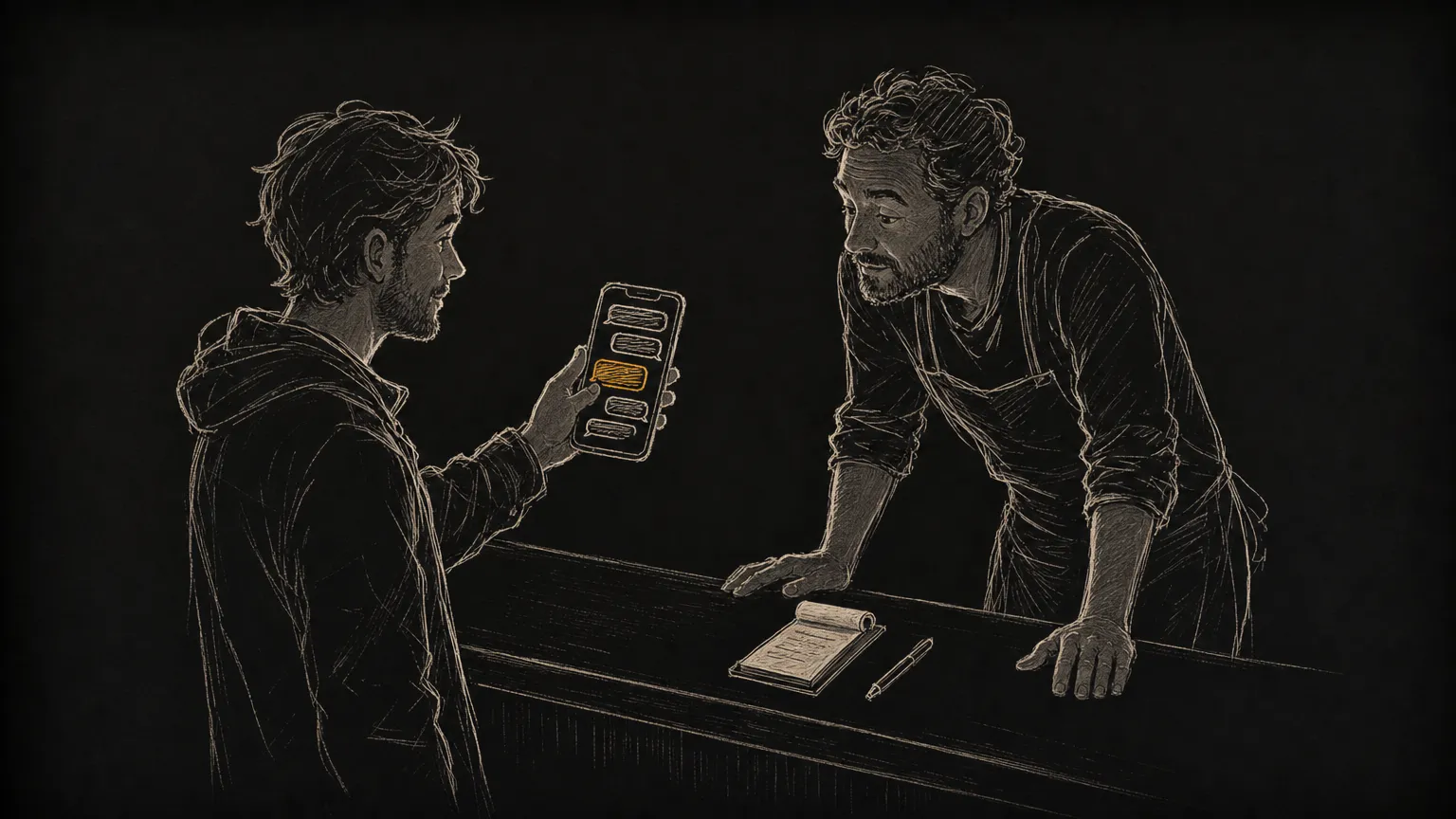
When your chatbot gives a customer a wrong answer, you will most likely end up honoring it, because the customer treats the answer as yours, and a Canadian tribunal agreed. Air Canada told that tribunal its chatbot was “a separate legal entity that is responsible for its own actions”, and paid anyway. United told a customer, by her account, that the bot was wrong and the one-year limit could not change. After a TV station called, it gave her a travel certificate, then $200 more for the inconvenience. Both businesses decided what to do after the mistake, in public. Make two decisions before your chatbot answers its first customer, and the same mistake costs you one reply.
In this article: what happens · refusing to honor it · your line · the test · the fix · answers to write yourself · questions people ask · where to start
What happens when a chatbot gives a customer the wrong answer?
When a chatbot gives a customer the wrong answer, the customer acts on it, then holds you to it with a screenshot. Two airline cases show how it goes.
| Air Canada | United | |
|---|---|---|
| What the chatbot said | A bereavement fare could be claimed after travel, within 90 days of buying the ticket | A $200 travel credit “stays active for 5 years from the date it’s deposited” |
| The real policy | Bereavement fares do not apply to completed travel, as another page of its site said | The credit expired on September 27, 2026 |
| The first reply | Admitted “misleading words” and said it would update the chatbot | By the customer’s account: “sorry, the bot told you that, but it’s one year and we can’t change it” |
| How it ended | A tribunal ordered it to pay C$812 | A travel certificate, then a $200 one for the inconvenience, after NBC 5 Chicago asked |
Sources: CBC News on Moffatt v. Air Canada, NBC 5 Chicago on United.
Both businesses paid in the end. Saying no first added a tribunal ruling with Air Canada’s name on it, and a segment about United on the Chicago news.
Can you refuse to honor what your chatbot said?
You can refuse to honor what your chatbot said, but the defenses Air Canada and United tried did not hold. Air Canada argued the chatbot was responsible for its own actions. The tribunal member called that “a remarkable submission” and wrote that “it should be obvious to Air Canada that it is responsible for all the information on its website.” Air Canada also argued that the right policy was on another page of its site. The tribunal found no reason the customer should know which page was accurate.
United told NBC 5 it gives customers a disclaimer that the information “may not always be complete or relevant.” It still gave the customer a travel certificate, then a $200 one.
This is not legal advice, and the law differs by country and state. The practical point does not: a customer holding a screenshot of your chatbot’s answer reads it as your word.
What should you decide before the first wrong answer?
Before your chatbot goes live, decide on a dollar line for its wrong answers. Under it, you honor the answer once per customer. Over it, a person replies the same day with the right answer and an offer.
| If the wrong answer would cost you | What you do | Who sends it |
|---|---|---|
| Less than your line | Honor it, once per customer, and fix the source that day | Whoever answers your inbox |
| More than your line | Give the right answer the same day, with an apology and an offer | A person, by name |
The line is yours to set. Measure it against what a customer is worth to you: the price of one job, a month of a subscription, a second order. “Once per customer” keeps a mistake from turning into a coupon. Either way, a person sends the reply, never the chatbot, because the customer has just learned not to trust it.
Write the line down where anyone who answers your messages can see it. Without it, whoever is on shift decides in the moment, with the customer waiting.
How do you find the wrong answers before a customer does?
Before launch, ask your chatbot the questions your customers already asked you, and read every answer yourself. Pull last month’s questions from your inbox, your contact form and your messages, word for word, typos included. Mark each answer right, wrong, or right but not how you would say it.
You would give a new hire the same first week: their replies cross your desk before they reach a customer, as in the article on automating customer emails. Every wrong answer you mark is one a customer never screenshots.
Run the same questions again after every change to a price or a policy. A chatbot that was right last month reads this month’s documents.
What do you do with a wrong answer you find?
Trace a chatbot’s wrong answer back to the document it read, and fix the document. Most wrong answers start in your own files: last year’s price list next to this year’s, a policy written one way on one page and another way on the next. Air Canada’s chatbot contradicted the airline’s own bereavement page.
We saw the same thing from the inside when we rebuilt how Cortado’s AI guest messaging finds its answers. Property data sat in separate sources, and when two of them disagreed, the answer depended on which one a question happened to reach. We moved the data into one store, and from then on someone had to decide, on purpose, which version was true.
For you, that means one place per fact, with a person’s name next to it. The person who changes a price changes the file the chatbot reads, the same day.
Which answers should a chatbot never write itself?
A chatbot should never write its own answer where a wrong one costs you money: prices, refunds, cancellation terms, deadlines, anything a customer will hold you to. Write those answers yourself, once, and have the chatbot repeat them word for word, or hand the customer to a person.
Fixed wording is the cheaper fix. It wins wherever the answer is the same for every customer, and it needs no test because the chatbot writes nothing new. For the five questions that cost the most when the answer is wrong, a plain FAQ page does the same job.
Anything that depends on the customer’s situation goes to a person. United told NBC 5 that when its credit expires depends on how the money was received. That is the kind of question a chatbot should hand over.
Frequently asked questions
Does a disclaimer protect you?
A disclaimer did not stop United from paying: the airline pointed to its disclaimer and still gave the customer two travel certificates. Keep the disclaimer if your lawyer wants it, and set your line anyway.
Is a wrong answer the AI vendor’s problem?
To your customer, a chatbot’s wrong answer is your problem, not the AI vendor’s, because they bought from you. The tribunal held Air Canada responsible for all the information on its website, chatbot included. Your contract with the vendor is a separate matter between the two of you.
How many questions should you test?
Test every question your customers sent you last month. If that runs to hundreds, test the most common twenty and every one that involves money.
Where do you start?
Start by writing down, today, the amount under which you will honor a chatbot’s wrong answer, and who replies above it. Then ask the chatbot last month’s questions before it answers anyone.
If you are about to put a chatbot in front of customers, send us the questions they asked most last month and tell us where your answers are written down. We will tell you which ones we would keep away from the chatbot.
Related services
Find the process worth fixing first
Tell us where the hours, the inquiries or the follow-up are getting stuck. We will tell you whether it is measurable and worth fixing.
- Your current process
- Your numbers
- One clear next step
- You stay in control